Q4 Estimated Taxes Due January 15th, 2026
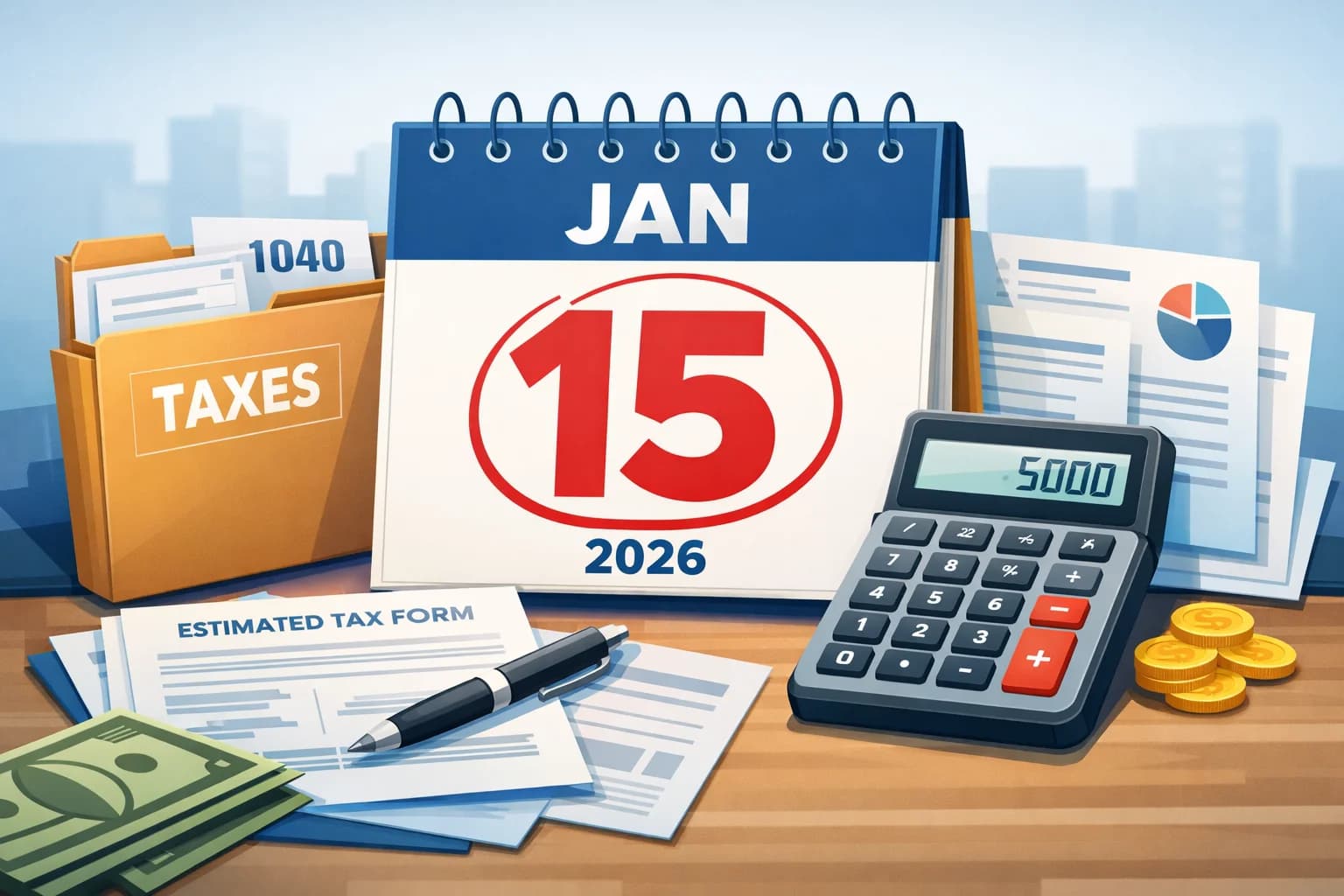
Here's what you need to know if you're not ready
Whoooo, it's that time of the year, y'all. Year end. And I'm watching a lot of business owners realize something uncomfortable: they didn't pay the IRS in January, and now it's too late.
Here's what I want you to understand—and this is real talk. The IRS doesn't care about your cash flow situation. They don't care that you had a slow quarter. They don't care that you're reinvesting everything back into the business. On the 15th, they expect a payment. And if you haven't made your quarterly estimated tax payments, you're about to find out what penalties look like.
The worst part? This is completely preventable.
The Problem Isn't Understanding Taxes
You already know estimated taxes exist. You know they're quarterly. You know the IRS expects them. That's not your problem.
Your problem is simpler: You don't actually know what you owe.
Most business owners can't answer this question with confidence: "How much profit did I actually make this quarter?" Your income bounces around. Seasonality is real. Some months are huge, some are slow. If your books aren't current, you're literally guessing what you owe the IRS. And that guess could be way off.
Then there's the other side of it. You want to hold onto your cash. Reinvesting in the business makes sense. Working capital is important. But the IRS doesn't factor that into their calculation. They want their money on the 15th regardless of your cash situation.
So you're stuck between not knowing what you owe and not wanting to give up the cash even if you did know. That's the real problem.
Who Needs to Make These Payments
The threshold is $1,000 in annual profit. If you're a sole proprietor, an LLC, or an S-Corp making over that, you're making quarterly payments. Here's who we're talking about:
LLC Owners
If you own a home services business, run an e-commerce store, manage a food truck, or staff an agency—you're making quarterly payments. The IRS is looking at your profit, and they want four payments a year.
S-Corp Owners
You made the jump to save taxes (which makes sense if you're doing six figures or more). You still make quarterly payments—the numbers are different, hopefully lower, but you're still sitting down four times a year to pay.
Side Hustle Owners
You work a job. Your employer withholds taxes. You think you're covered. Then you start freelance work or a side business. Your W2 withholding doesn't cover that extra income. The IRS still expects quarterly payments on it.
When This Actually Comes Due
Quarterly taxes don't follow the calendar. I know it's annoying. Here are the actual dates:
Quarter | Income Period | Due Date |
|---|---|---|
Q4 2025 | Sept 1 – Dec 31, 2025 | January 15, 2026 |
Q1 2026 | Jan 1 – Mar 31, 2026 | April 15, 2026 |
Q2 2026 | Apr 1 – May 31, 2026 | June 16, 2026 |
Q3 2026 | June 1 – Aug 31, 2026 | September 15, 2026 |
⚠️ If you haven't made Q4 yet:
Don't panic. Make the payment. The penalty for paying late is smaller than the penalty for not paying at all. The difference is in the thousands.
Why Smart Business Owners Still Miss This
You're not missing this because you're careless. You're missing it because you're focused on the right things. You're serving customers. You're building. You're managing your team. You're growing.
Taxes don't generate revenue, so they end up at the bottom of the priority list. Even though they shouldn't.
The real issue: You can't estimate what you owe if you don't know what you made. If your books aren't updated monthly, you're guessing in January. And a bad guess costs you.
Here's What Actually Matters
Estimated taxes aren't complicated in concept. Four payments a year based on your profit. That's it.
The complexity comes from not having current numbers. If you know your profit. If you know your expenses. If you have a clear picture of your business finances right now—not in April—then estimating what you owe is just math.
Without that clarity? You're flying blind. And flying blind in January when the government is asking for money is stressful.
The business owners we work with are different. They're not panicking in January because they already know what they made. They know where the money came from. They know what they spent it on. Their books are clean and current. That changes everything about how you operate, how you think about growth, whether you can actually afford to hire someone, and how you plan for the future.
Two Paths Forward
Want the Weight Off Your Shoulders?
Our weekly bookkeeping keeps your books current, your numbers clear, and January doesn't feel like a panic. You get clean financials every month and the ability to estimate accurately.
Learn About Weekly Bookkeeping
Prefer to Handle It Yourself?
That's fine. But when QuickBooks doesn't make sense or you need a second set of eyes on your numbers, LiveHelp gets you instant access to someone who knows.
That's what I want for your business. Numbers you understand. Decisions you can make with confidence. And January mornings where you're not scrambling.
— Jonathan
Jonathan N.
Author
Jonathan is CEO of Balanex, a financial operations firm that helps small business owners stop flying blind and start making confident decisions with clear numbers. With 27+ years of hands-on experience managing complex bookkeeping, payroll, and financial operations—including managing accounting for Series B startups through IPO and overseeing payroll for 2,500+ employees—Jonathan has worked with hundreds of businesses across home services, food service, e-commerce, and staffing. A QuickBooks ProAdvisor since 1997 and former Intuit Quickbooks Live employee, he specializes in translating financial chaos into actionable strategy.
Disclaimer:
The content on this blog is for informational purposes only and does not constitute financial, tax, legal, or accounting advice. Balanex is a bookkeeping firm — not a CPA, Enrolled Agent, financial advisor, or attorney. Always consult a licensed professional before taking any action. Read our full disclaimer here.